A new version is available.

We've updated our website. Please click the button to download the new version.

Download now

The dream of flying (Swiss Stories 2014, by Gian Ehrenzeller) - Swiss Press Award

The 33-year-old base jumper Bruno Waelli on his way to the Hinterrugg exit "Sputnik".
Photo / Swiss Stories
2014

The dream of flying

Gian Ehrenzeller

Base jumper Bruno Wälli is 33 years old, lives in Unterwasser in the canton of St. Gallen, and has been jumping since April 2012. Base jumping has always fascinated me, but it was somehow never tangible. Like when you live in Switzerland and want to become a surfer. Then I met the Swiss base pioneer Ueli Gegenschatz on the train up Chäserrugg, my local mountain. That's how I learned that there is an exit on Hinterrugg, the highest mountain in the Churfirsten range. Gegenschatz was the first to go down there. That was in 2008. After that, I started skydiving, and after over 500 jumps, I made my first base jump from a bridge in Eastern Switzerland. The flight from Hinterrugg takes about 1:15 to 1:30 minutes. You're in free fall for that long. Then you're on the parachute for another minute or two. In free fall, you reach speeds of up to 180 kilometers per hour. But that doesn't seem that fast to me. It's just a good feeling. It's like you could fly. Well, actually, you are. The whole experience is simply beautiful for me. You go up the mountain with a few good friends, enjoy the view, and then make a nice jump. I'm aware that I'm doing something dangerous. That's why I jump conservatively. You don't necessarily have to fly two meters above the rock. You can create safety reserves, for example, by opening the parachute earlier and not letting yourself fall "into the basement." I don't think pushing yourself to the limit is wise. No video shot is worth taking a useless risk.†
Of course, it's a worry when someone has an accident. Especially if I knew the person. Then you ask yourself: What could have happened? This uncertainty simply remains. It's sometimes oppressive.
 Many people talk to me about the risk. The decision whether to jump or not is entirely up to me. I can influence it myself and am not endangered by others, like when driving a car. I bear the consequences alone and endanger no one. Except myself. Not jumping is always the right decision. There doesn't even need to be a reason for it.
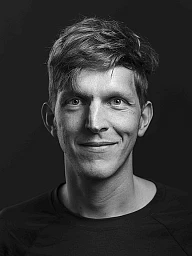
Keystone

Photo / Swiss Stories
2014

Gian Ehrenzeller

Base jumper Bruno Wälli is 33 years old, lives in Unterwasser in the canton of St. Gallen, and has been jumping since April 2012. Base jumping has always fascinated me, but it was somehow never tangible. Like when you live in Switzerland and want to become a surfer. Then I met the Swiss base pioneer Ueli Gegenschatz on the train up Chäserrugg, my local mountain. That's how I learned that there is an exit on Hinterrugg, the highest mountain in the Churfirsten range. Gegenschatz was the first to go down there. That was in 2008. After that, I started skydiving, and after over 500 jumps, I made my first base jump from a bridge in Eastern Switzerland. The flight from Hinterrugg takes about 1:15 to 1:30 minutes. You're in free fall for that long. Then you're on the parachute for another minute or two. In free fall, you reach speeds of up to 180 kilometers per hour. But that doesn't seem that fast to me. It's just a good feeling. It's like you could fly. Well, actually, you are. The whole experience is simply beautiful for me. You go up the mountain with a few good friends, enjoy the view, and then make a nice jump. I'm aware that I'm doing something dangerous. That's why I jump conservatively. You don't necessarily have to fly two meters above the rock. You can create safety reserves, for example, by opening the parachute earlier and not letting yourself fall "into the basement." I don't think pushing yourself to the limit is wise. No video shot is worth taking a useless risk.†
Of course, it's a worry when someone has an accident. Especially if I knew the person. Then you ask yourself: What could have happened? This uncertainty simply remains. It's sometimes oppressive.
 Many people talk to me about the risk. The decision whether to jump or not is entirely up to me. I can influence it myself and am not endangered by others, like when driving a car. I bear the consequences alone and endanger no one. Except myself. Not jumping is always the right decision. There doesn't even need to be a reason for it.

Author