A new version is available.

We've updated our website. Please click the button to download the new version.

Download now

My dream - the Royal Ballet School in London (Daily Life 2015, by Thomas Kern) - Swiss Press Award
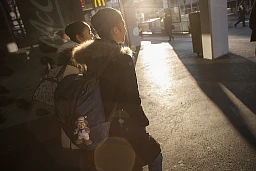
I'm not tired at all, but rather excited when I think about the competition.
Photo / Daily Life
2015

My dream - the Royal Ballet School in London

Thomas Kern

On January 24, 10 p.m., Kana Arai and Natsuka Abe, both 16, arrive in Lausanne accompanied by Miwa Hormoto, director of the Acri-Horimoto Ballet Academy. "I'm not tired, I'm excited," says Kana, despite the 18-hour journey. This year, 71 dancers are participating in the Prix de Lausanne, including 21 from Japan. The number of Japanese dancers has been growing for several years. This is because Japan has many high-level ballet schools, but no dance schools where dancers are paid, as in Switzerland. The Japanese have to leave their country if they want to become professionals; the Prix de Lausanne is the best way to get there, says Miwa, who worked at the Basel Theater in her youth. She has been leading her students to the Prix de Lausanne for 10 years with great pride. Natsuka, whose mother and grandmother practiced classical ballet, began dancing naturally at the age of three and later decided to make dancing her profession. "My dream is to go to the Royal Ballet School in London." For the Prix de Lausanne, Kana has practiced a classical and a contemporary dance, the Rite of Spring, in which she transforms into an animal. "I try to imagine what someone feels the moment they are killed: the fear and agony," she says. Kana's goal is the Royal Winnipeg Ballet School in Canada. "I know it will be difficult for me to return to Japan when I become a professional, but this is exactly what I want to do; I've come to terms with it." The Prix de Lausanne is one of the best opportunities to meet a good ballet director, says Miwako. Natsuka and Kana listen attentively to their teacher. For now, however, all that matters to them is the competition, which begins in two days.

Swissinfo.ch

Photo / Daily Life
2015

Thomas Kern

On January 24, 10 p.m., Kana Arai and Natsuka Abe, both 16, arrive in Lausanne accompanied by Miwa Hormoto, director of the Acri-Horimoto Ballet Academy. "I'm not tired, I'm excited," says Kana, despite the 18-hour journey. This year, 71 dancers are participating in the Prix de Lausanne, including 21 from Japan. The number of Japanese dancers has been growing for several years. This is because Japan has many high-level ballet schools, but no dance schools where dancers are paid, as in Switzerland. The Japanese have to leave their country if they want to become professionals; the Prix de Lausanne is the best way to get there, says Miwa, who worked at the Basel Theater in her youth. She has been leading her students to the Prix de Lausanne for 10 years with great pride. Natsuka, whose mother and grandmother practiced classical ballet, began dancing naturally at the age of three and later decided to make dancing her profession. "My dream is to go to the Royal Ballet School in London." For the Prix de Lausanne, Kana has practiced a classical and a contemporary dance, the Rite of Spring, in which she transforms into an animal. "I try to imagine what someone feels the moment they are killed: the fear and agony," she says. Kana's goal is the Royal Winnipeg Ballet School in Canada. "I know it will be difficult for me to return to Japan when I become a professional, but this is exactly what I want to do; I've come to terms with it." The Prix de Lausanne is one of the best opportunities to meet a good ballet director, says Miwako. Natsuka and Kana listen attentively to their teacher. For now, however, all that matters to them is the competition, which begins in two days.

Author